Hutchinson CareOS One
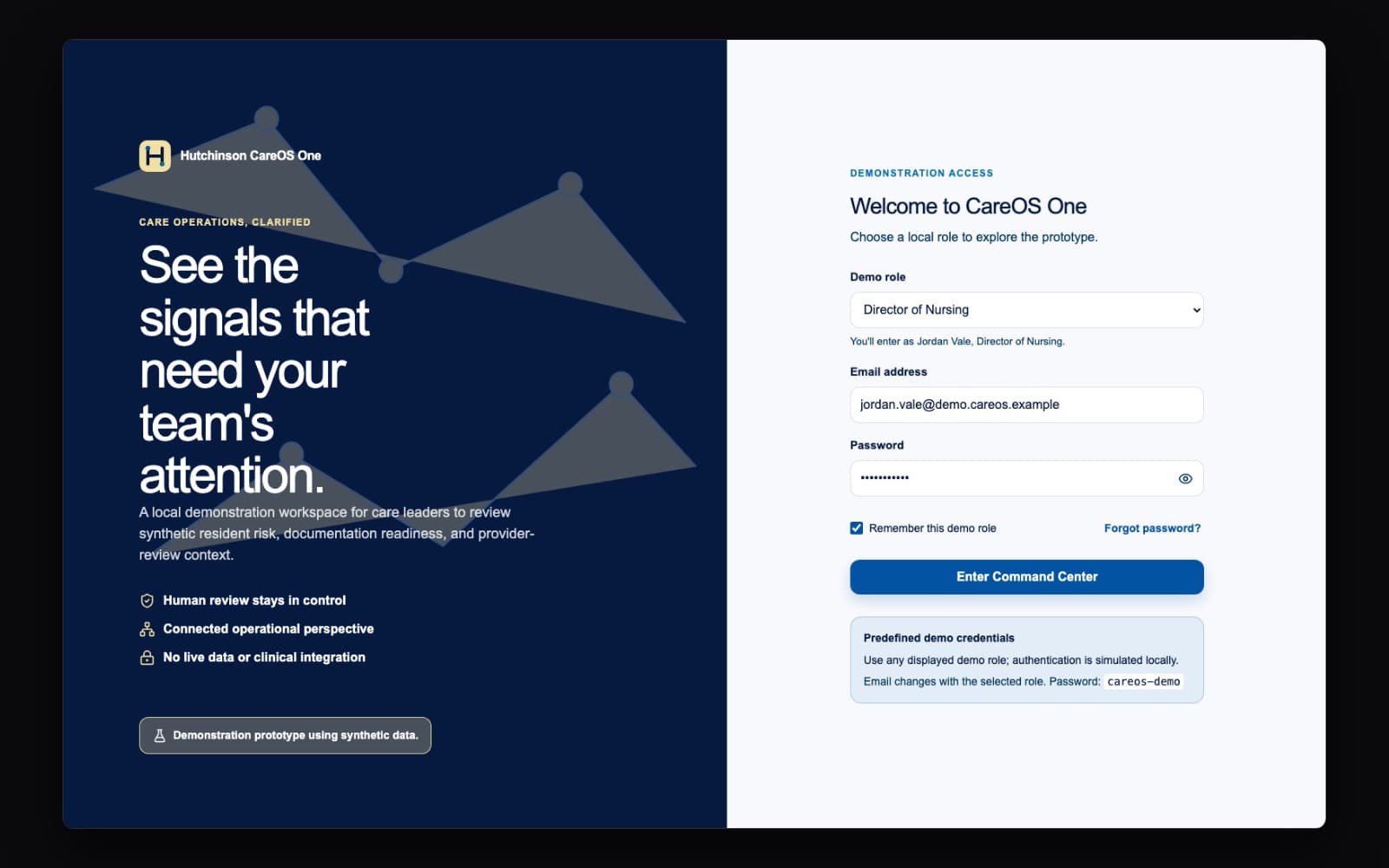
Care Operations, Clarified — a working prototype that gives skilled nursing leaders a connected operational view of resident risk, documentation readiness, and provider-review context, built entirely on synthetic data.
Healthcare • Artificial Intelligence • Education • Creative Technology
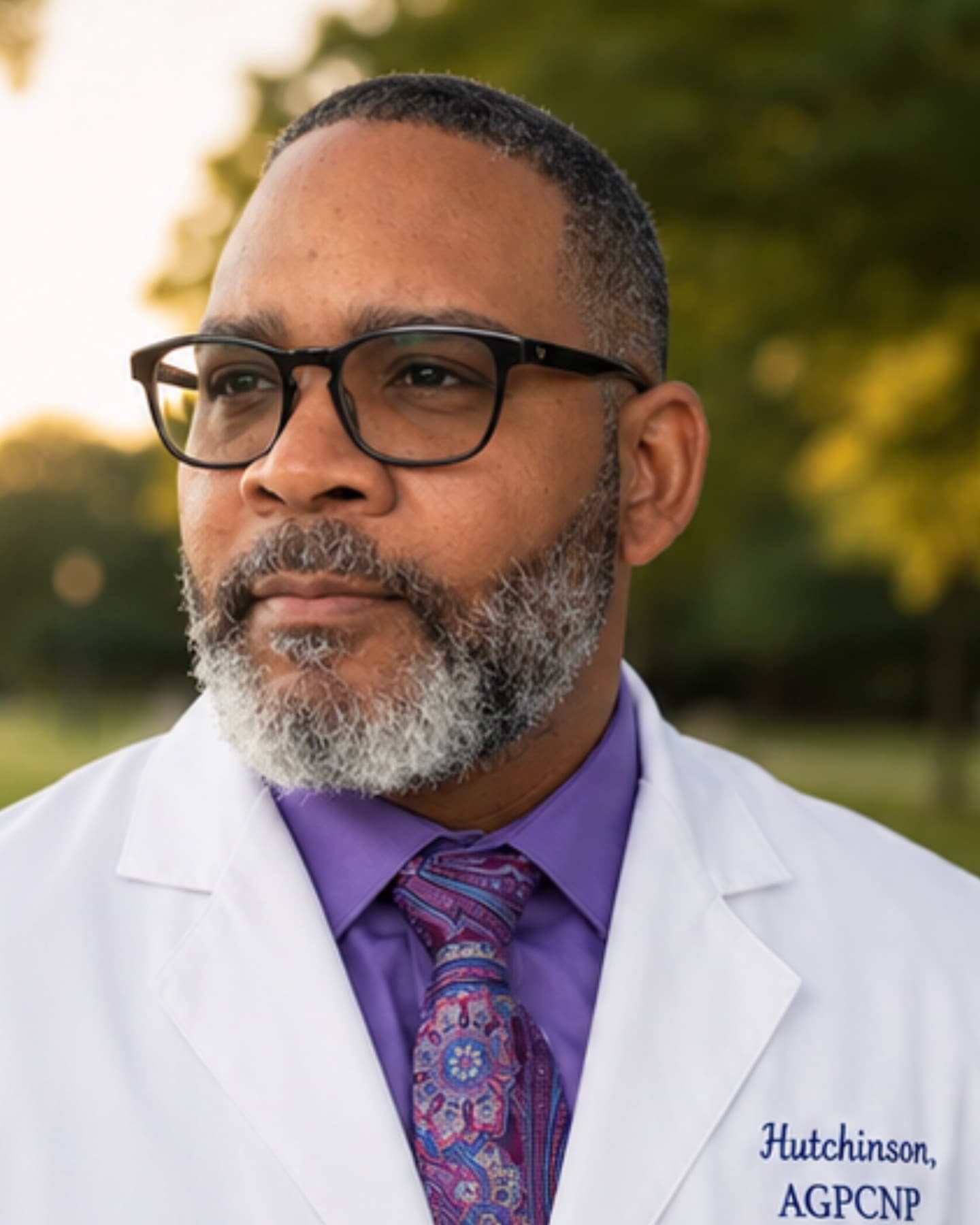
Board-certified nurse practitioner, Fleet Marine Force veteran, retired critical care paramedic, and educator of more than three decades — now building practical AI for the systems I have spent thirty-five years working inside.

What I do
Each of these areas informs the others. The healthcare experience is what makes the AI work practical; the teaching is what makes any of it useful to someone else.
Clinical and skilled nursing experience grounded in real operational challenges.
Practical AI workflows, prompt systems, automation concepts, and emerging-technology analysis.
Educational resources, professional development, military leadership, and a long-term commitment to teaching future healthcare professionals.
Moon Tape Radio, visual storytelling, multimedia production, and experimental design concepts.
Introduction
I began developing leadership and resilience through military service before building a career in healthcare. Years inside skilled nursing environments revealed how documentation burdens, fragmented systems, and outdated workflows affect both professionals and residents. My current work explores how artificial intelligence, thoughtful design, and education can create more efficient and humane systems.
Read My StorySelected work
Concepts, research and creative work developed under Hutchinson FutureWorks. Each entry states plainly where it currently stands.

Care Operations, Clarified — a working prototype that gives skilled nursing leaders a connected operational view of resident risk, documentation readiness, and provider-review context, built entirely on synthetic data.

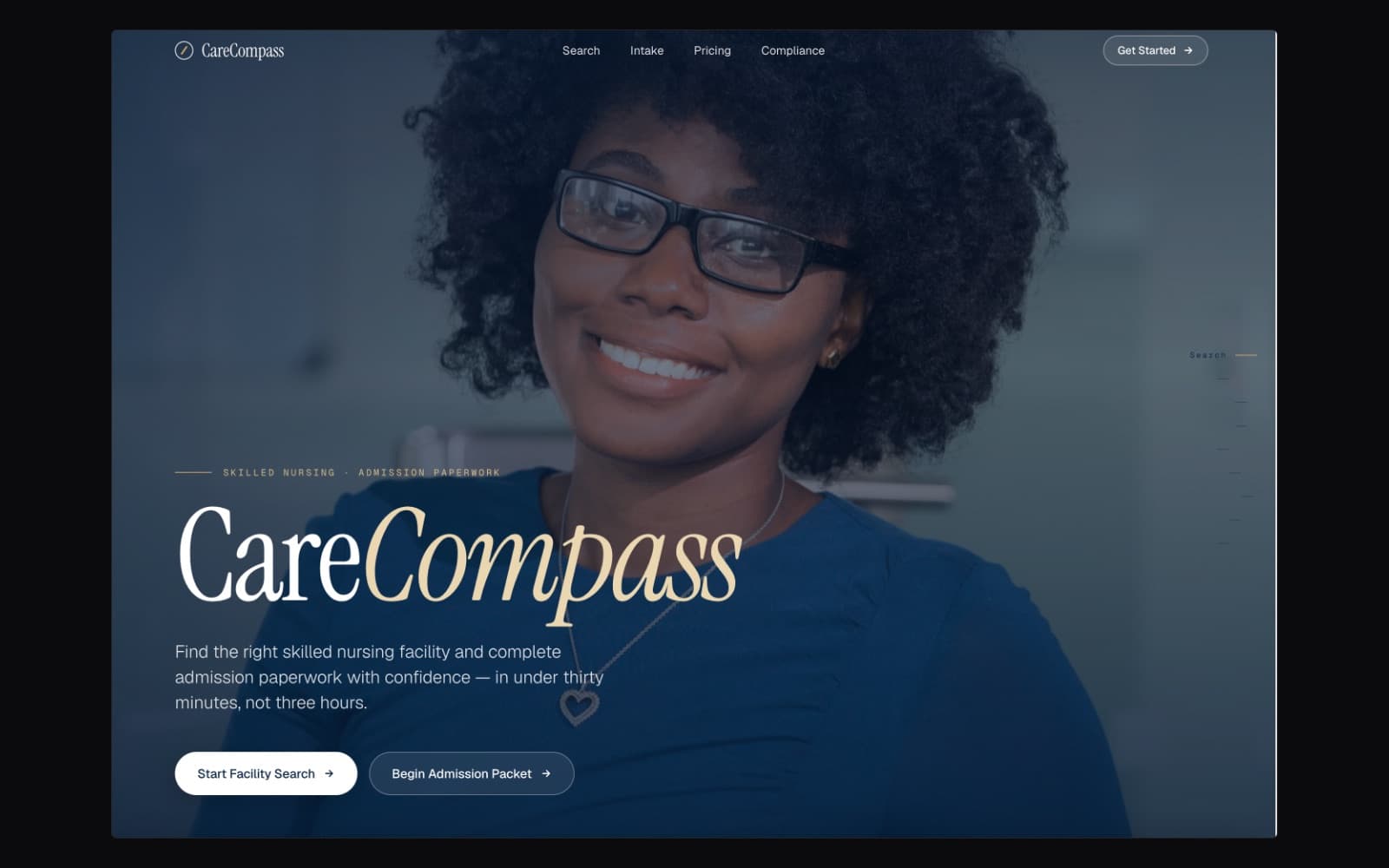
In design. A searchable database of skilled nursing facilities paired with a guided admission-paperwork intake for families — aimed at finding the right facility and completing the packet in under thirty minutes rather than three hours.

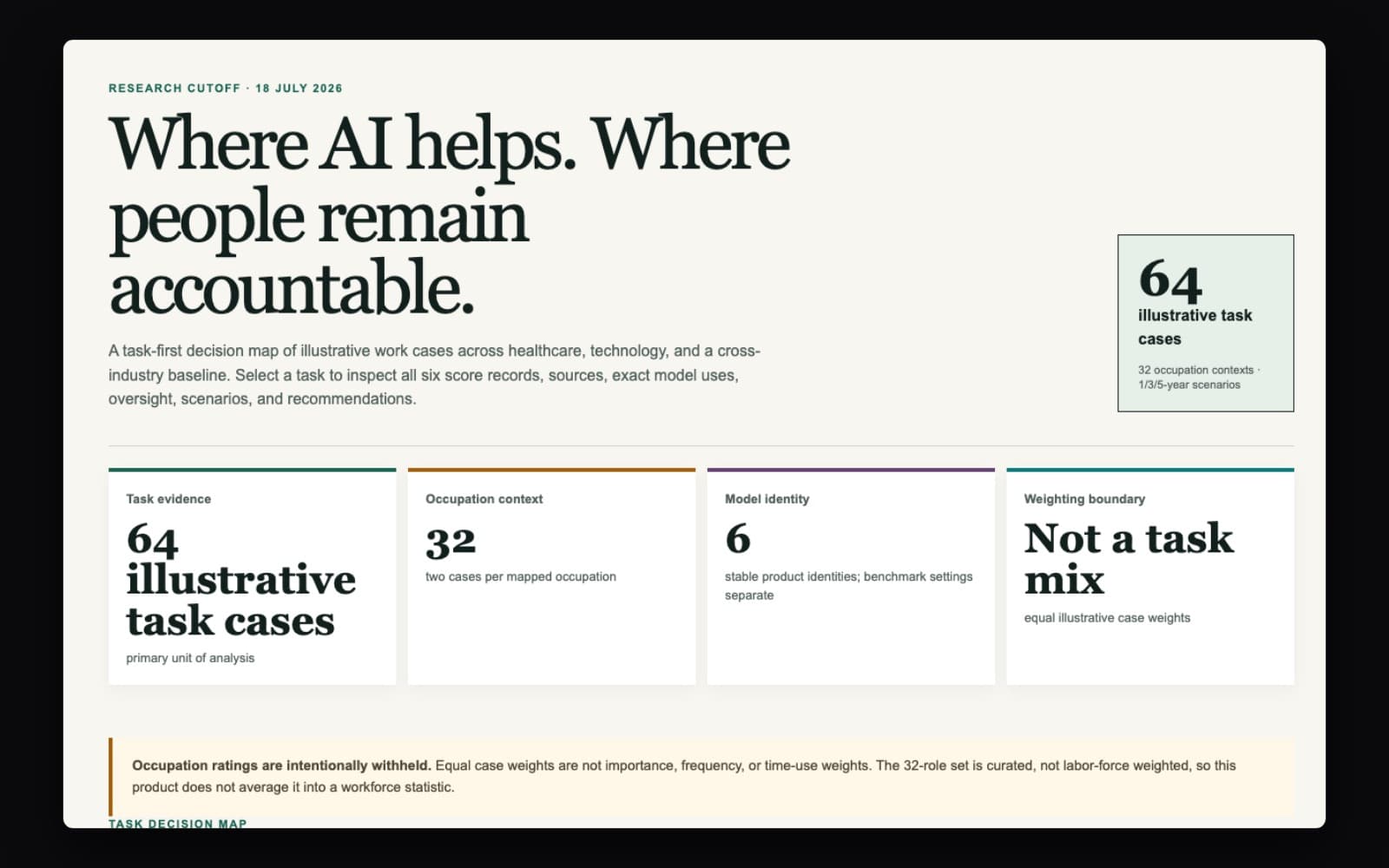
Where AI helps. Where people remain accountable. A task-level decision tool scoring 64 illustrative work tasks across healthcare, technology, and baseline industries against six frontier models.

A structured concept for improving skilled nursing documentation, clinical organization, consistency, and provider oversight with AI-assisted workflows.

A future-facing operating model exploring how AI could streamline skilled nursing operations, improve quality monitoring, and reduce administrative friction.

Visual guides and practical workflows that help healthcare professionals use AI to strengthen résumés, identify opportunities, and present their experience effectively.

A visual and musical storytelling project built around atmospheric lofi experiences, original imagery, and immersive world-building.

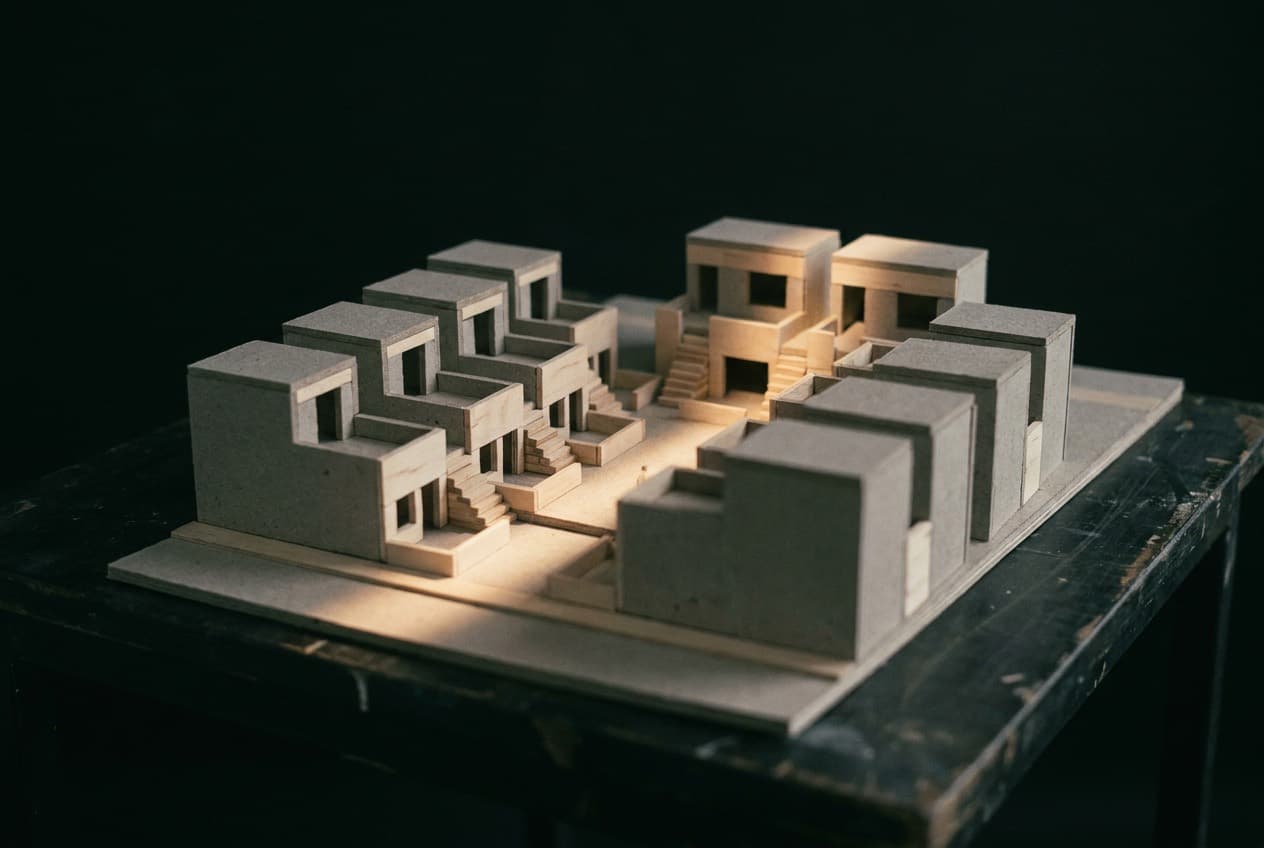
Modular and affordable housing concepts designed around efficiency, rapid installation, climate resilience, and future economic pressures.

Accessible explanations of developments in artificial intelligence, healthcare, transportation, energy, and human-machine collaboration.
Healthcare AI
The most valuable healthcare technology is not the technology that appears most advanced. It is the technology that reduces friction, supports better decisions, protects patients, and allows professionals to focus more attention on care.
AI systems should support professional judgment, not replace licensed clinical decision-making.Explore Healthcare AI
Reducing duplicated entry and making the shape of routine documentation predictable.
Surfacing gaps while they can still be corrected, rather than at audit.
Giving staff a usable framework for when these tools can and cannot be relied on.
Career path
Thirty-five years, in the order it happened. Each phase supplied a constraint the next one had to respect.
Expeditionary and battlefield medical care with the 2nd Marine Division, 8th Marine Regiment. Deployed in support of Operations Desert Shield and Desert Storm, delivering combat casualty care in Southwest Asia — field trauma stabilization, sick call, preventive medicine, and casualty evacuation coordination in austere forward environments.
911 emergency response and advanced life support across a diverse patient population — the foundation for everything that followed in critical care transport and emergency nursing.
High-acuity prehospital and interfacility critical care transport, including ventilator, cardiac, and multi-drip patient management. Served as field leader and preceptor, supervising paramedics and EMTs, and supported EMS quality assurance and continuing education for field crews.
Emergency and medical-surgical nursing in high-volume regional hospitals, applying prehospital critical care expertise to rapid triage, resuscitation, and stabilization. Served as clinical resource and preceptor, bridging EMS and nursing practice.
Acute and critical care nursing inside a nationally recognised academic medical center. Served on the front lines of the COVID-19 pandemic response, caring for high-acuity and isolation patients under evolving protocols alongside attending physicians, residents, and fellows.
Primary care for a daily census of 20–25 patients across skilled nursing and long-term care facilities. Complex chronic disease management, wound and palliative care, transitional and post-acute management, interdisciplinary care coordination, and advance-care-planning conversations aimed at reducing avoidable hospitalizations.
More than 5,000 healthcare professionals, EMS providers, nurses, and students educated across three decades. Named EMS Instructor of the Year in 2012. Built EMS training programs from initial certification through advanced continuing education, and created a Nursing Preceptor Course for Baptist Memorial Hospital.
Doctoral study alongside applied work in healthcare artificial intelligence, informatics, quality improvement, and evidence-based practice — including evaluating large language models for accuracy, safety, and clinical relevance, and building the AI concepts published under Hutchinson FutureWorks.
Current research
Open questions I am actively working on. These are directions of enquiry, not finished findings.
How documentation, scheduling, and quality workflows inside skilled nursing facilities could be restructured around AI assistance without displacing professional judgment.
What healthcare professionals actually need to learn about AI tools, and how that education can be delivered in a way that fits clinical schedules.
Design patterns that keep intelligent systems legible, correctable, and accountable to the people responsible for the outcome.
Insights
Plain-language thinking on healthcare technology, AI workflows, and what actually changes when these tools arrive in a working environment.
Most conversations about AI in long-term care start with the technology. A more useful starting point is the parts of the day that consume time without improving care.
Automation makes an existing process faster. Improvement asks whether the process should exist. The two get confused constantly, and the confusion is expensive.
Clinical staff are already using these tools. The open question is whether they are using them with any framework for judging when the output can be trusted.

Creative Media
A visual and musical storytelling project pairing atmospheric lofi music with original illustrated environments. Each episode is built as a place rather than a playlist — a single scene, held long enough to become somewhere you can work, study, or rest inside.
Explore media and creative workGet in touch
I am interested in healthcare innovation, AI-assisted workflows, education, research, creative technology, and meaningful professional collaborations.